
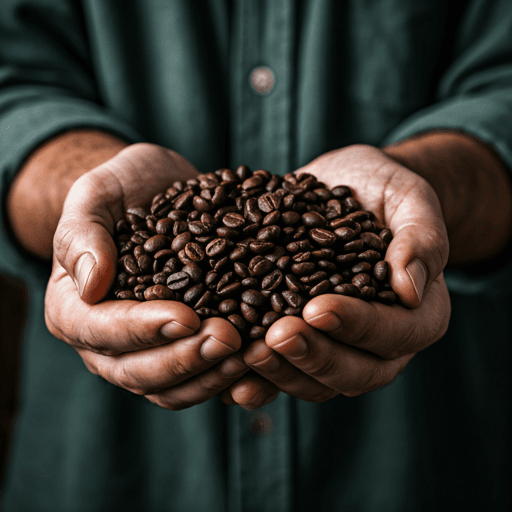
Ground coffee is roasted coffee beans that have been milled into small particles but still need to be brewed. Whole coffee beans are those same roasted beans left intact, to be ground fresh at home. "Coffee powder" is the slippery word: in India it can mean either fine filter-coffee grounds or instant coffee that simply dissolves in hot water. Get these three straight and you will stop buying the wrong thing.
This guide explains the difference in plain terms, with honest notes on taste, freshness, price and which form suits which brewer. We are an India-based coffee and machine supplier, so we have framed everything around what you actually find on Indian shelves.
Ground coffee, coffee beans and coffee powder at a glance
All three start from the same raw material: roasted Arabica or Robusta beans. The difference is how processed they are by the time they reach your kitchen, and whether you still have to brew them.
| Form | What it is | Brew or dissolve? | Freshness | Best for |
|---|---|---|---|---|
| Whole coffee beans | Roasted beans, intact | Grind, then brew | Stays fresh 2-4 weeks after the bag opens | Anyone with a grinder who wants the best cup |
| Ground coffee | Beans milled to a chosen size | Brew (no grinder needed) | Goes stale in days once opened | French press, moka pot, filter, drip |
| Filter coffee powder | Finely ground coffee, often with chicory | Brew in a South Indian filter | A few days once opened | Traditional kaapi |
| Instant coffee powder | Brewed coffee, dried into crystals | Dissolve in hot water | Months, even years, sealed | Speed and convenience |
Notice the trap. "Coffee powder" covers two completely different products. One you brew; one you just stir into water. Read the pack before you assume.
Whole coffee beans: the freshest starting point
Whole coffee beans are roasted beans that have not been ground. While the bean is intact, the oils and aromatic compounds inside stay sealed away from oxygen and moisture. That is why an opened bag of whole beans holds its character for two to four weeks, while ground coffee fades in a matter of days.
The catch is you need a grinder. The moment you grind, the surface area explodes and the coffee starts to oxidise. So beans give you the best flavour only if you grind right before brewing. If you are weighing up your options here, our coffee grinder buying guide for India walks through burr versus blade and what to spend.
Why grind size matters
Grinding is not one-size-fits-all. Each brewer wants a specific particle size, because the size controls how long water stays in contact with the coffee.
- Espresso: very fine, like table salt. Short contact, high pressure. See how to make espresso at home.
- Moka pot / South Indian filter: fine to medium-fine.
- Pour over / drip: medium.
- French press: coarse, like sea salt. Long steep, so coarse grounds avoid over-extraction. More in our French press guide.
This is the single biggest reason coffee lovers buy whole beans. Pre-ground coffee is locked to one grind size; beans let you match the brewer.
Ground coffee: convenience without losing the brew
Ground coffee is the middle path. The roaster has done the milling for you, usually to a medium grind that suits drip and press brewing, so you skip the grinder. You still brew it properly, so you keep most of the depth and aroma that instant coffee loses.
The trade-off is freshness. Once a bag of ground coffee is open, it stales quickly because every particle is exposed to air. Buy small packs, keep them airtight and cool, and use them within two to three weeks. If you see "grounded coffee" on a listing, that is just a common misspelling of ground coffee, the same product.
Rule of thumb: whole beans for flavour, ground coffee for convenience without sacrificing a real brew, instant for pure speed.
Filter coffee powder and chicory
In South India, "coffee powder" almost always means finely ground coffee for a traditional metal filter. The signature is chicory, a roasted root blended in at roughly 80:20 coffee to chicory. Chicory adds body, a darker colour and that distinctive bittersweet aroma, and it makes the decoction stretch further. It is still ground coffee, just a regional style with an added ingredient. We cover the full ritual in our guide to South Indian filter coffee.
Instant coffee powder: speed over depth
Instant coffee is the odd one out. It is actual coffee that has been brewed, then dried by freeze-drying or spray-drying into soluble crystals or powder. You do not brew it; you dissolve it. That is why it is so fast and why it keeps for months.
Honestly, the flavour is milder and flatter than freshly brewed coffee, and some find it slightly bitter from the processing. Many Indian instant jars also blend in chicory, and flavoured or "premix" versions add sugar, milk solids and anti-caking agents. None of that is wrong, it is just a different product with a different goal. For the full picture, read our instant coffee buying guide and the Nescafe and Nestle range explainer.
Taste, price and freshness compared
| Factor | Whole beans | Ground coffee | Instant powder |
|---|---|---|---|
| Flavour depth | Highest | High | Lowest |
| Effort | Grind + brew | Brew only | Stir and go |
| Freshness window (opened) | 2-4 weeks | Days to 2 weeks | Months |
| Equipment needed | Grinder + brewer | Brewer | Just hot water |
| Typical Indian retail | Roasters, specialty packs | Most supermarkets | Every kirana and store |
On price, ranges in India are wide and shift constantly, so treat these as rough bands rather than fixed MRP. Mass-market instant powder is the cheapest per cup. Branded ground coffee sits in the middle. Single-origin whole beans cost the most per kilo but often work out reasonable per cup because you control the dose. If you want to go deeper on origin, our Koraput single-origin guide is a good next read.
Which should you buy?
- You own or will buy a grinder: whole coffee beans, every time. Best flavour, most flexible.
- You want real brewed coffee but no grinder: ground coffee matched to your brewer.
- You love traditional kaapi: filter coffee powder with chicory.
- You need a cup in 60 seconds: instant coffee powder.
For an office or outlet serving many cups a day, the calculation changes. Bean-to-cup espresso machines grind fresh per cup, and vending machines run on instant premix for unbeatable speed. See the trade-offs in our coffee machine buying guide.
Brew that quality at home, office or outlet
Whichever form fits your day, the machine does half the work. We supply, install and service espresso machines, coffee makers and vending machines across India, so you get fresh ground coffee or fast instant cups without the guesswork. Tell us your daily cup volume and we will recommend the right setup and keep it refilled and serviced.