
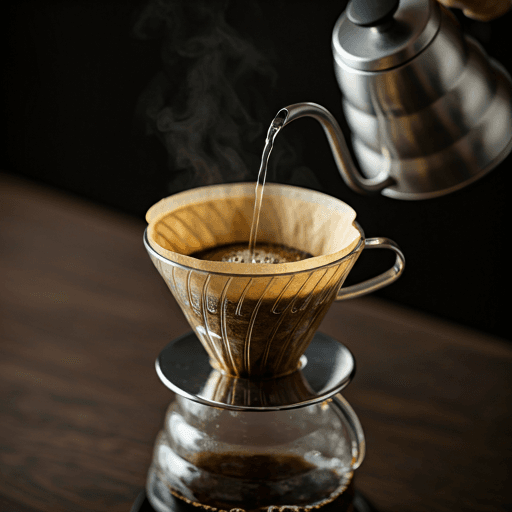
Filter coffee is South India's signature brew: a strong, dark coffee decoction made by slowly percolating finely ground coffee (usually blended with roasted chicory) through a two-chamber metal filter, then mixed with hot milk and sugar and frothed by pouring between a steel tumbler and a wide-mouthed dabarah. Often called kaapi coffee in Tamil Nadu, Karnataka, Andhra Pradesh and Kerala, it is smoother and less acidic than a straight black brew, and it is the everyday cup in millions of South Indian homes, darshinis and Udupi restaurants. This guide explains what filter coffee actually is, how it is made step by step, the right coffee-chicory ratio, and how cafes and offices can serve authentic kaapi at scale.
What is filter coffee (kaapi)?
At its core, filter coffee is two things: a concentrated coffee decoction and the milky drink built from it. The decoction is brewed in an Indian filter, a stacked stainless-steel device with a perforated upper cup that holds the grounds and a lower cup that catches the brew. Hot water sits on top of the coffee bed and drips through slowly over 15-25 minutes, producing an intense, syrupy liquid. That decoction is then diluted with boiling milk and sugar to make the cup most people simply call the filter coffee.
Two features make kaapi distinct from a Western pour-over or an espresso. First, the grind is very fine, almost like fine sand, so extraction is heavy and the brew is strong. Second, most traditional blends include roasted chicory root, which adds body, a gentle dark-caramel bitterness, and that characteristic lingering finish. The result is a comforting, full-bodied coffee that holds up beautifully against milk.
Which beans go into kaapi?
Most South Indian filter coffee is built on a base of Robusta and Arabica grown in India's coffee belt, the hills of Coorg (Kodagu), Chikmagalur and Baba Budangiri in Karnataka, the Nilgiris and Shevaroys in Tamil Nadu, and Araku Valley in Andhra Pradesh. Robusta brings the punchy strength and crema-like body that stands up to milk; Arabica adds aroma and smoothness. The beans are typically given a medium-dark to dark roast, which is why the cup tastes bold and slightly bittersweet rather than bright and fruity. When you buy "filter coffee powder," you are usually buying a roasted blend of these beans ground fine and cut with chicory.
Filter coffee vs instant coffee
Instant coffee is brewed, dehydrated coffee crystals that dissolve in seconds. Filter coffee is freshly extracted from ground beans, so it keeps far more aroma, oils and flavour. The trade-off is time and a little equipment. Once you have tasted a properly brewed kaapi, the difference is hard to ignore, which is exactly why filter coffee remains the gold standard in South Indian food culture.
What you need to make filter coffee
- An Indian coffee filter: stainless steel, with an upper perforated cup, a pressing disc, the lower collection cup and a lid. Common household sizes brew 2-4 cups.
- Filter coffee powder: a fine grind, ideally a coffee-chicory blend. Popular ratios are 80:20 (coffee to chicory) for a balanced restaurant-style cup, 70:30 for a thicker, more economical brew, or 90:10 / pure coffee for purists.
- Full-fat milk: traditional kaapi uses boiled whole milk for richness and froth.
- A tumbler and dabarah: the steel tumbler and its wide saucer-like companion used to pour, cool and froth the coffee.
- Sugar to taste, plus freshly boiled water at roughly 90-95 degrees C (just off the boil).
How to make South Indian filter coffee: step by step
- Add the coffee (1 min). Place 2-3 tablespoons of fine filter coffee powder into the upper perforated cup for roughly 2 cups of decoction. Level it gently.
- Press lightly. Set the pressing disc on top and tamp very lightly. Too tight and the water barely drips; too loose and the brew turns weak.
- Pour hot water (1 min). Pour about 3/4 to 1 cup of just-off-boil water (around 90-95 degrees C) over the disc until it sits above the grounds. Cover with the lid.
- Let it drip (15-25 min). Walk away. The decoction percolates slowly into the lower cup. Longer dripping yields a stronger, darker decoction. A good ratio is roughly 1 part coffee to 10-15 parts water.
- Heat the milk. Boil full-fat milk separately. Hot milk is essential for an authentic, frothy kaapi.
- Build the cup. Pour 4-5 tablespoons (about 1/4 cup) of decoction into a tumbler, add 3/4 cup hot milk and sugar to taste. Adjust decoction up or down for your preferred strength.
- Froth it (1 min). Pour the coffee back and forth between the tumbler and the dabarah from a height. This mixes, cools to drinking temperature and creates the signature foamy top.
- Serve immediately while hot and frothy. A classic ratio to remember: 1 part decoction, 3 parts milk, sugar to taste.
Tip: never let the decoction boil after brewing, and don't reuse old, sitting decoction for the best flavour. Brew fresh, ideally within a few hours.
Getting it right: strength, chicory and water
Choosing your coffee-chicory ratio
Chicory is not a defect, it is a tradition. It thickens the decoction, smooths sharp notes and stretches your coffee cost. Use the table below to pick a blend by taste.
| Blend (Coffee:Chicory) | Body & taste | Best for |
|---|---|---|
| 90:10 or pure coffee | Brightest, most coffee-forward, lighter body | Purists, specialty palates |
| 80:20 | Balanced, classic restaurant kaapi | Most homes and cafes |
| 70:30 | Thicker, darker, slightly sweet-bitter finish | Strong, economical daily brew |
| 60:40 | Heaviest body, lowest cost per cup | High-volume canteens |
Water and grind
Water quality matters more than most people expect. Hard or heavily chlorinated municipal water dulls flavour and scales up equipment, so a basic filter or RO is worth it, especially for commercial machines. Keep the grind fine and fresh; stale, coarsely ground powder is the most common reason home kaapi tastes flat.
Common filter coffee mistakes (and quick fixes)
- Brew tastes weak or watery: the powder is too coarse, the disc was packed too tightly so water channelled around it, or you used too little decoction in the cup. Use a finer grind and add more decoction.
- Brew is harsh or over-bitter: water was at a rolling boil, or the decoction sat and was reheated. Use water just off the boil and never boil the finished decoction.
- No froth: the milk or decoction had cooled. Both must be hot, and you need to pour from a height between tumbler and dabarah to aerate.
- Flat, dull aroma: the powder is stale. Buy small batches, store airtight away from heat, and use within two to three weeks of grinding.
Serving filter coffee at home, in offices and in cafes
The manual steel filter is wonderful for one household, but it does not scale. If you are serving coffee to a team, a cafe queue or HoReCa guests, the brewing method changes while the goal, a strong decoction plus hot milk, stays the same.
Home (1-4 cups a day)
A traditional 2-4 cup steel filter plus a tumbler and dabarah is all you need. Budget roughly INR 500-1,500 for a good filter set. Buy fresh blended filter coffee powder in small quantities so it does not go stale.
Office (10-100+ people)
For a workplace, consistency and speed beat ritual. A bean-to-cup or tea-and-coffee vending machine delivers filter-style milky coffee at the push of a button, with no one tending a filter all morning. For 20-50 staff, a tabletop bean-to-cup unit is ideal; for 100+ or multiple floors, look at higher-capacity vending. Our guide on the best tea and coffee vending machine for an office breaks down throughput and cost per cup, and you can browse current vending machines on site.
Cafe and HoReCa (high volume)
Busy outlets that want true South Indian kaapi often run a commercial decoction brewer or large-batch filter alongside a milk boiler, so they can serve authentic, frothed filter coffee quickly during peak hours. If your menu also includes espresso-based drinks, a commercial espresso machine pairs naturally with a decoction station. See our explainer on how espresso is made and our roundup of the best espresso machines in India to compare brewing styles, or explore espresso machines in our range.
Cost per cup: a quick reality check
At high volume, small choices compound. A 70:30 or 60:40 coffee-chicory blend lowers your bean cost while keeping a strong, milky cup most Indian palates expect, which is why canteens lean that way. Whole milk, sugar and electricity are the other recurring costs; a bean-to-cup or vending machine with metered dosing keeps per-cup spend predictable and stops the over-pouring you get with hand brewing. For an office of 30-40 people drinking two cups a day, that consistency typically matters more than the machine's sticker price.
Get the right setup for your volume
Whether you are kitting out a single cafe in Chennai or rolling out coffee across offices in Bengaluru, Hyderabad and beyond, the right machine depends on your headcount, peak demand and water conditions. We supply, install and service coffee and tea machines across India, with help choosing blends and decoction setups that taste like proper kaapi. Browse our coffee and tea machines, or request a quote and we will recommend a setup matched to your daily cup volume and budget.
The short version
Filter coffee, or kaapi, is decoction plus hot milk and sugar, brewed slowly through a steel filter and frothed between a tumbler and dabarah. Use a fine coffee-chicory blend (80:20 is a safe start), fresh powder, good water, and full-fat milk. At home a steel filter is perfect; for offices and cafes, a bean-to-cup, vending or commercial decoction setup delivers the same beloved taste at scale.