
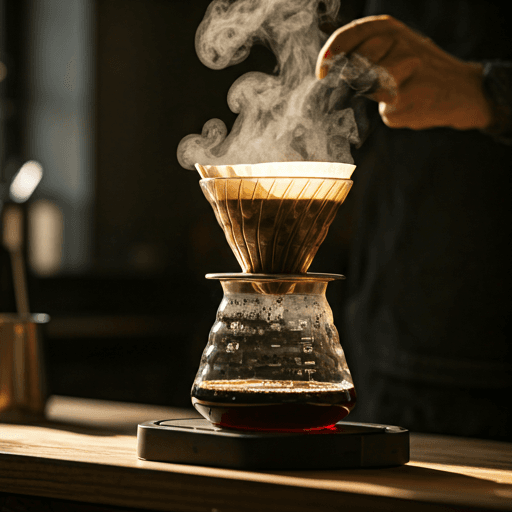
A cafe is a public space built around coffee, tea, light food, and unhurried conversation. In India it is also a cultural institution. Over roughly ninety years, the cafe has carried debates, first dates, study sessions, and now laptop-fuelled workdays. This guide explains what a cafe actually is, how India's coffee shop culture evolved through four distinct eras, and what separates a heritage canteen from a sleek modern cafe or a creative art cafe.
What is a cafe, really?
At its simplest, a cafe is a place that sells coffee and tea by the cup and invites you to sit. That last part matters. A tea stall sells you chai and moves you along. A cafe sells you a seat, a table, a refill, and time. The word comes from the French café and the Italian caffè, both meaning coffee and the room you drink it in.
A cafe usually combines a few things:
- An espresso machine or brew bar at the heart of the room
- A barista who pulls shots, steams milk, and often brews by hand
- A short menu of coffee, tea, and a few snacks or bakes
- Seating designed for staying, not just collecting an order
That mix of drink, people, and place is why a cafe behaves less like a shop and more like a living room you rent by the cup. India did not invent the cafe, but it has reinvented it several times.
The four eras of India's cafe culture
India's coffee shop story moves in clear waves. Each one changed who went to a cafe, what they ordered, and why.
1. The Indian Coffee House (1930s onward)
The first wave was political before it was commercial. The colonial-era Coffee Board ran India Coffee Houses from the 1930s and 1940s, with an early outlet in Bombay around 1936. When the Board moved to shut them in the mid-1950s, the dismissed workers organised into cooperative societies, with support from leaders including the communist politician A.K. Gopalan, and took the chain over themselves. The first Indian Coffee Workers Co-operative Society was formed in Bangalore in August 1957, and the first Indian Coffee House under worker control opened in Delhi that October, before the network spread across Kerala, Tamil Nadu, West Bengal, and Punjab.
These cafes were cheap, plain, and fiercely democratic. Waiters in turbaned uniforms served filter coffee, dosa, and cutlets to students, writers, and clerks alike. The College Street branch in Kolkata became legendary as a haunt of Satyajit Ray, Amartya Sen, Mrinal Sen, and Aparna Sen. With around 400 outlets and decades of history, the Indian Coffee House remains the country's first true cafe culture. We cover it more fully in our guide to iconic heritage cafes in India.
2. The chain cafe and the rise of "hanging out" (1996 onward)
The second wave made the cafe aspirational. On 11 July 1996, V.G. Siddhartha opened the first Cafe Coffee Day on Brigade Road, Bengaluru. It launched almost as an internet cafe at a time when the web was new in India, and it quickly drew the city's young IT professionals who could pay around Rs 25 for a cappuccino and a place to socialise. Barista arrived soon after with an Italian-styled, espresso-forward model.
This was the era that turned coffee from a home habit into a lifestyle. "Let's meet at CCD" became shorthand for a date, an interview, or a catch-up. The chains standardised what an Indian cafe menu looked like: cappuccino, latte, cold coffee, frappes, and a slice of cake. If you want the full lineage of these brands, read our explainer on famous Indian cafe chains and coffee brands.
3. The global cafe arrives (2010s)
The third shift was international. Starbucks entered India in 2012 through a 50:50 joint venture with Tata, opening its first store in Mumbai and bringing the American "third place" idea of a cafe that sits between home and office. Costa, Coffee Bean & Tea Leaf, and others expanded the field. Prices climbed, but so did the expectation of consistency, free Wi-Fi, and a comfortable place to work for hours.
4. The specialty third wave and the modern cafe (2013 onward)
The current wave is about the coffee itself. Homegrown roasters built a serious specialty scene around single-origin Indian beans and careful brewing. Blue Tokai, co-founded by Matt Chitharanjan in 2013, runs more than 150 cafes across major cities, with its outlets working as tasting rooms for single-origin beans and manual brews. Third Wave Coffee, founded in Bengaluru in 2016, has grown to around 165 outlets. Black Baza and others pushed sustainable, traceable sourcing.
This is the modern cafe: minimal interiors, a visible brew bar, a barista who can talk you through a pour-over, and beans roasted within the last few weeks. It treats coffee a bit like wine, with origin, processing, and roast date all on the label.
Heritage cafe vs modern cafe vs art cafe
Not every cafe wants the same thing. Here is how the main types compare.
| Type | What it's about | What you order | Vibe |
|---|---|---|---|
| Heritage cafe | History, affordability, community | Filter coffee, dosa, cutlets | Plain, busy, democratic |
| Chain cafe | Familiarity, meeting spot | Cappuccino, cold coffee, cake | Predictable, social |
| Modern cafe | Coffee quality, design | Single-origin espresso, pour-over | Minimal, calm, focused |
| Art cafe | Creativity and culture alongside coffee | Coffee plus a book, exhibit, or gig | Expressive, communal |
What is an art cafe?
An art cafe blends the coffee shop with a gallery, bookstore, or performance space. The coffee is genuine, but the draw is the culture around it: wall-hung exhibitions, open-mic nights, poetry readings, or shelves of books for sale. Kunzum in Delhi paired good coffee with a travel bookshop and a pay-what-you-like ethos. The Cha Bar inside Oxford Bookstore turned a tea menu into a reading room. Across cities you will find independent art cafes hosting local painters and musicians. We go deeper in our guide to art cafes in India.
What is a studio cafe?
A studio cafe is a close cousin. It pairs a working creative studio, often pottery, design, ceramics, or photography, with a coffee counter. You might throw a clay bowl, paint, or browse a designer's pieces while a barista makes your flat white. The studio cafe sells an experience and a workshop as much as a drink, which is why it has thrived in maker-friendly pockets of Bengaluru, Goa, and Mumbai.
What makes a cafe good?
Across every type, a few things separate a cafe people return to from one they pass through once.
- The coffee. Fresh beans, a clean machine, and a barista who tastes their own shots. If the espresso is bitter or sour every time, nothing else saves it.
- The seating. A cafe is a place to stay. Power points, comfortable chairs, and tables you can actually work at matter as much as the menu.
- The pace. Good cafes let you linger without pressure. That is the whole social contract.
- The people behind the bar. A skilled, friendly barista turns a transaction into a regular habit.
If you are trying to find a place that gets these right, our guides on finding the best coffee shop near you and cozy hidden cafes are good starting points.
Bringing cafe quality home or to the office
The best part of today's cafe culture is that the gap between a good cafe and your own kitchen has narrowed. A modern cafe runs on three things you can replicate: fresh beans, a capable machine, and a little technique. A quality espresso machine and a burr grinder will get a home setup most of the way to that flat-white standard, and our guide to making espresso at home walks through the rest.
For offices, the same logic applies. A bean-to-cup or vending machine turns the break room into a reliable cafe corner, which is why so many teams now skip the coffee run entirely.
We supply, install, refill, and service coffee, tea, espresso, and vending machines across India, so you can recreate cafe-quality coffee at home or at work without the cafe queue. Browse our espresso machines and office vending machines, or tell us your space and footfall and we will recommend the right setup.