
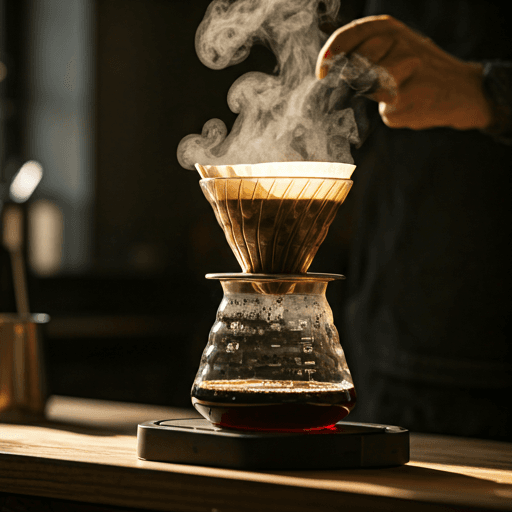
Searching for a good coffee shop near me usually starts on Google Maps, but the map alone will not tell you which place actually pulls a clean espresso. The fastest filter in India in 2026: open Maps, sort by rating, then read the recent reviews for words like "single origin," "roast date," "flat white," and "filter coffee" — and check whether the place names its roaster. A coffee shop that tells you where its beans come from is almost always worth the walk.
This guide shows you how to judge a coffee shop on quality, not just vibes, what separates a serious coffee house from a logo-led chain, and how to get the same cup at home when nothing nearby measures up.
How to find a good coffee shop near me, fast
You do not need an app you have never heard of. Three free tools cover most of India:
- Google Maps — sort by rating, but read the newest 10 reviews, not the average. A 4.6 from 2023 means little; a 4.3 with fresh reviews praising the espresso means a lot.
- Instagram — search your city hashtag (#mumbaicoffee, #bengalurucafe, #delhicoffee). Latte art, visible pour-overs, and posted roast dates are honest signals. Stock photos and filters are not.
- Word of mouth — local coffee groups and a quick ask in a neighbourhood WhatsApp or Reddit thread beat any algorithm for hidden spots.
One caveat. "Near me" results reward marketing budgets, not cup quality. The highest-rated pin in your area might be a dessert cafe that happens to serve coffee. Use the checklist below before you commit your morning to it.
What makes a great coffee shop (the quality checklist)
A genuine specialty coffee house gives off the same handful of signals everywhere — Bengaluru, Kochi, or a small Pune lane. Look for these.
1. They name their beans
Good shops list the origin and often the estate — Chikmagalur, Coorg, Araku, or an imported single origin. A printed roast date (ideally within the last 2–3 weeks) tells you the beans are fresh, not warehouse stock. If the menu says only "coffee" with no story, lower your expectations.
2. The espresso menu is real
A serious coffee shop offers a proper espresso line — cortado, flat white, cappuccino, long black — not just frappes and 200-rupee caramel drinks. The presence of a cortado on the board is a small but reliable tell that someone behind the counter cares about extraction.
3. The equipment is dialled in
Look at the machine. A clean, well-kept espresso machine and a separate grinder per coffee suggest the shop invests in consistency. Latte art is not just decoration — it means the milk was steamed properly and the shot was timed. Cafes that cut corners on gear cannot hide it in the cup.
4. The barista can answer a question
Ask "what's the roast today?" or "is this a darker or lighter roast?" A passionate barista lights up. A blank stare tells you the place is running on a manual, not a craft. This single question filters more cafes than any rating.
5. Filter coffee is respected, not ignored
In India, the third-wave boom has not displaced tradition — South Indian filter coffee still drives a large share of national coffee consumption. A great coffee house in India often does both: a precise pour-over and a proper steel-tumbler kaapi. If you want to understand that side deeply, read our explainer on South Indian filter coffee (kaapi).
Coffee shop vs coffee house vs chain: what's the difference
The words get used loosely, so here is a plain breakdown of what you are actually walking into.
| Type | What to expect | Best for |
|---|---|---|
| Specialty coffee house | Named beans, in-house or partner roaster, skilled baristas, focused menu | The best cup; coffee as the main event |
| Independent neighbourhood cafe | Personality, decent espresso, food, working space | Hanging out, meetings, a reliable flat white |
| National chain | Consistent, predictable, sweeter drinks, every metro | Convenience and a known quantity |
| "Le cafe" style outlets | Found at railway stations, malls, airports; fast and standardised | A quick caffeine fix on the move |
India's organised cafe market has crossed roughly 30,000 outlets, and chains like Third Wave Coffee and Blue Tokai have pushed specialty culture from Bengaluru into Mumbai, Delhi, Jaipur, and tier-2 cities. That is great news — but a chain logo is a floor on quality, not a ceiling. The best coffee in most cities still comes from a small, stubborn independent coffee house that roasts close to home.
Reading reviews without getting fooled
Ratings are noisy. Here is how to read them like someone who actually wants good coffee.
- Filter for the word "coffee." If every review talks about cake, pasta, and ambience but never the coffee, it is a restaurant with a machine.
- Trust recency over volume. Staff and roasters change. Twenty fresh reviews beat two thousand old ones.
- Watch for specifics. "Best cold brew in Kochi" or "their Araku single origin is excellent" is a real coffee drinker. "Nice place 👍" is not.
- Mind the photos. User-uploaded shots of the actual cup and crema tell you more than the cafe's own gallery.
City by city: where coffee culture runs deep
Some Indian cities reward the search more than others. Bengaluru leads, helped by its closeness to Karnataka's coffee estates, and Mumbai and Delhi followed fast. If you are exploring a specific city, our local pages are a useful starting point for the lay of the land:
- Bengaluru — the spiritual home of India's third wave; dense with roasteries and pour-over bars.
- Mumbai — a deep, experimental specialty scene across Bandra, Lower Parel, and the suburbs.
- Delhi — strong independents alongside every major chain.
- Kochi and Chennai — where filter coffee tradition and new cafes sit side by side.
When nothing nearby is good: make café-quality coffee at home
Sometimes the honest answer to "coffee shop near me" is: there isn't a great one, yet. The fix is to bring the café home. You do not need a 2-lakh setup — you need fresh beans, the right gear, and a little technique.
Match the brew to your budget
- Filter / South Indian kaapi — a steel filter and a stovetop are the cheapest route to a serious cup. See our kaapi guide.
- French press — forgiving, full-bodied, ideal for beginners. Read the French press guide for India.
- Moka pot — strong, espresso-style coffee on a gas hob for under a few thousand rupees. See the moka pot guide.
- Espresso machine — if you want flat whites at home, this is the real thing. Compare options on our espresso machines page.
Whatever method you choose, a burr grinder matters more than most people expect — pre-ground coffee goes flat within days. Our coffee grinder buying guide walks through what to buy at each price point.
For offices and shared spaces
If the "near me" search is really about keeping a team caffeinated, a bean-to-cup machine often beats sending everyone out for coffee. It serves espresso-based drinks on demand, and the per-cup cost stays low across a busy floor. Browse coffee makers and vending machines, or see the full catalogue.
The quick verdict
To find a great coffee shop near you in India: start on Maps and Instagram, but judge the place on named beans, a real espresso menu, clean equipment, and a barista who can talk about the roast. Respect filter coffee as much as the flat white. And when the neighbourhood comes up short, the most reliable "coffee shop near me" is the one you build on your own counter.
We install, refill, and service coffee, espresso, and vending machines across India — from a single home espresso setup to a full office. Tell us what you need and we'll send a quick quote.