
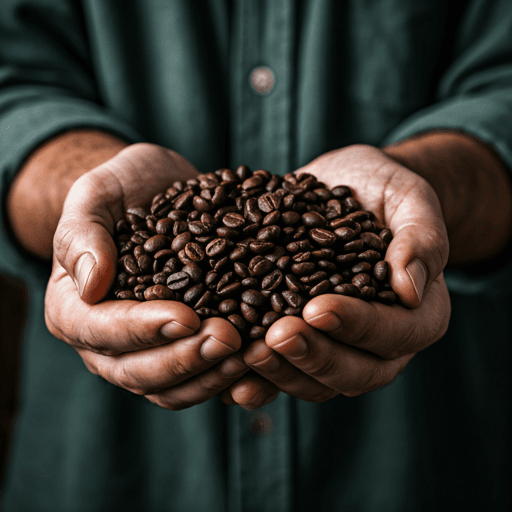
Hazelnut coffee is roasted or instant coffee carrying a sweet, nutty flavour, and it is the most popular flavoured coffee sold in India today. It sits alongside two other "specialty" styles people often confuse with it: chicory coffee, the malty South Indian blend, and Vietnamese coffee, a strong robusta brew sweetened with condensed milk. This guide explains what each one actually is, how it tastes, what it costs in India, and how to brew it at home, in an office or in an outlet.
The three are not the same thing. One is a flavour added to coffee. One is a plant blended into coffee. One is a brewing method and recipe. Knowing which is which makes shopping far easier.
Hazelnut coffee: India's favourite flavoured coffee
Hazelnut coffee means coffee that has been infused with hazelnut flavouring, either natural nut oils or food-grade flavour compounds, during or after roasting. The beans themselves are ordinary Arabica or Arabica-robusta blends; the nuttiness is added. There is usually no actual hazelnut nutrition in the cup, so it stays calorie-light until you add milk or sugar.
It is the easiest "café flavour" to like. The aroma reads as dessert, the bitterness is softened, and it pairs naturally with milk. That is why almost every Indian specialty brand lists it as their first flavoured SKU.
Forms you will find in India
- Instant hazelnut coffee — freeze-dried or spray-dried granules and crystals. Just add hot water or milk. The most common format for home and office.
- Flavoured ground coffee — roasted, flavoured beans pre-ground for a French press, moka pot or filter.
- Coffee cubes / drip bags — single-serve formats popularised by newer D2C brands.
Hazelnut coffee brands and Indian price bands
Prices are approximate MRP-style ranges and shift with pack size and offers. Treat them as "around", not exact.
| Brand | Typical format | Bean | Approx. price band |
|---|---|---|---|
| Sleepy Owl | Instant crystals | 100% Arabica | ~₹250–400 / small jar |
| Bevzilla | Instant powder & cubes (Turkish Hazelnut) | 100% Arabica | ~₹250–400 / pack |
| Coffeeza | Flavoured ground coffee | 100% Arabica | ~₹700–850 / 250g |
| Tariero / Daily Grind | Instant & ground | Arabica / blend | ~₹300–500 |
If you want to compare these against the wider market, our best coffee brands in India guide and the premium brands explainer go deeper on line-ups and quality.
How to make hazelnut coffee at home
- For instant: add 1–2 tsp granules to a cup, pour 150–180 ml of hot (not boiling) water or warm milk, and stir. Sweeten only if needed; the flavour already reads sweet.
- For ground flavoured coffee: brew as you would normal coffee in a French press or moka pot, then add milk. Avoid espresso machines with very oily flavoured beans, as oils can clog grinders over time.
Chicory coffee: the malty South Indian blend
Chicory coffee is not flavoured coffee at all. Chicory is the roasted, ground root of a plant (Cichorium intybus), blended into ground coffee. It is the defining ingredient of authentic South Indian filter coffee (kaapi).
The habit reached India during the colonial period, echoing an older European trick: when coffee was scarce and costly, roasted chicory was mixed in to stretch supply. In India it stayed because people liked what it did to the cup.
What chicory actually does
- Body and colour — chicory adds density and a darker brown, giving the decoction a full, syrupy richness ideal for filter brewing.
- Flavour — a malty, slightly woody, gently bitter note that South Indian drinkers consider essential.
- Yield — it increases cup yield, so a given amount of decoction goes further.
- Less caffeine per cup — chicory root contains no caffeine, so a blend dilutes the caffeine of pure coffee.
Common chicory blend ratios
| Blend | Coffee : Chicory | Character |
|---|---|---|
| Pure / "peaberry" | 100 : 0 | Clean, bright, no malt |
| Classic Mysore-style | 80 : 20 | Balanced, the popular default |
| Strong filter house style | 70 : 30 | Dark, thick, malty |
| Budget commercial | 60 : 40+ | Heavy malt, lighter on coffee |
Brands like Cothas, Narasu's, Leo and Cafe Coffee Day's filter packs sell at roughly ₹150–350 per 500g depending on blend and grade. Cothas, for instance, sells everything from an 85:15 specialty blend to a 60:40 strong blend, so you can dial the malt up or down. To brew it the traditional way, you steep the ground blend in a metal South Indian filter, draw the decoction, and mix it with hot frothy milk and sugar.
Vietnamese coffee: strong robusta with condensed milk
Vietnamese coffee, or cà phê sữa đá in its iced form, is defined by method and recipe rather than flavour. It uses dark-roasted robusta brewed slowly through a small metal drip filter called a phin, dripped onto a layer of sweetened condensed milk, then stirred. Robusta carries roughly twice the caffeine of Arabica and tastes bolder and more bitter, which is exactly why the sweet milk works.
India grows a lot of robusta, so good beans for this style are easy to source locally. You do not strictly need a phin; a moka pot or a strong French press brew works as a stand-in.
How to make Vietnamese iced coffee (cà phê sữa đá)
- Spoon about 2–3 tbsp of sweetened condensed milk into the bottom of a heatproof glass.
- Add roughly 20–25g of coarse-ground dark robusta to the phin and level it.
- Bloom with a splash of hot (~95°C) water for 30 seconds, then top up and let it drip slowly.
- Once dripping stops, stir to combine the strong brew with the condensed milk.
- For iced: fill a tall glass with ice and pour the mixed coffee over it.
A phin filter costs very little online in India. Condensed milk (the same tin used in Indian desserts) is in every grocery store, so the whole kit is cheap to assemble.
Hazelnut vs chicory vs Vietnamese: quick comparison
| Style | What it is | Taste | Best brewed with | Sweetness |
|---|---|---|---|---|
| Hazelnut coffee | Flavour added to coffee | Sweet, nutty, soft | Instant, French press, moka pot | Tastes sweet even unsweetened |
| Chicory coffee | Roasted root blended in | Malty, woody, full-bodied | South Indian metal filter | Added via milk & sugar |
| Vietnamese coffee | Method + condensed-milk recipe | Strong, bold, bittersweet | Phin filter, moka pot | Very sweet (condensed milk) |
Which should you choose?
- Want a crowd-pleasing café flavour? Start with hazelnut coffee, ideally an instant Arabica jar.
- Want authentic South Indian comfort? Buy an 80:20 chicory filter blend and a metal filter.
- Want a punchy iced pick-me-up? Go Vietnamese with dark robusta and condensed milk.
If you are still deciding between whole beans, ground and instant for any of these, our ground vs beans vs powder guide breaks down the trade-offs in plain terms.
Serving these at home, office or outlet
For one or two cups at home, instant hazelnut, a chicory filter, or a phin will do nicely. For an office pantry or a café counter, the bottleneck is consistency and volume, not the flavour itself. That is where a proper coffee maker or a vending machine earns its place: same cup every time, no daily fuss.
We install, refill and service coffee, espresso, tea and vending machines across India, from Bengaluru to Mumbai, so you can brew that hazelnut, filter or robusta quality reliably wherever you are. Tell us your daily cup count and we will recommend a fit. Get a quick quote and we will take it from there.