
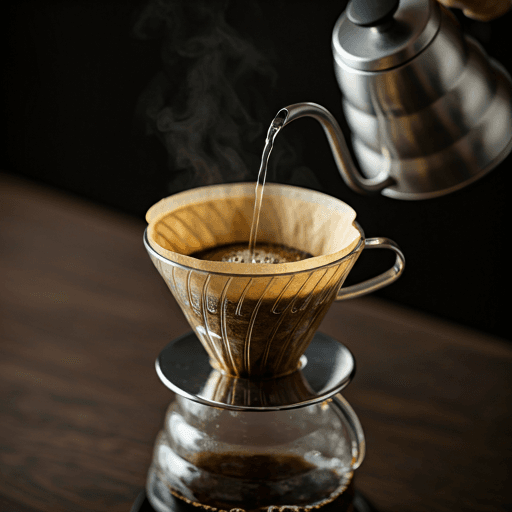
When you search "third wave coffee near me", you are usually after one thing: a cafe that treats coffee seriously rather than as a backdrop for photos. Third-wave coffee means single-origin Indian beans, a printed roast date, lighter roasts that taste of the farm, and baristas who can brew a clean pour-over. The fastest way to spot the best ones is to read the menu and the bag, not the wall paint. This guide explains what the term means, how to separate substance from set-dressing, and how to find good cups across India.
What "third wave coffee near me" actually means
Coffee culture is often split into three "waves". The first wave was instant and convenience — think jars of soluble coffee on every kitchen shelf. The second wave was the cafe-chain era that made espresso and lattes mainstream and turned coffee into a place to sit. The third wave treats coffee like wine: traceable to a single estate, roasted in small batches, and brewed to show off where the beans grew.
In India this matters because we grow excellent coffee ourselves. The third-wave movement here leans hard on home-grown origins — Chikmagalur and Coorg (Kodagu) in Karnataka, the Nilgiris in Tamil Nadu, Wayanad in Kerala, and the floral, wine-like beans of Araku Valley in Andhra Pradesh. A genuine third-wave cafe will usually tell you which of these your cup came from. So when you type "third wave coffee near me", the realistic answer in 2026 is: yes, most metros and a growing number of tier-2 cities have at least one. Bengaluru leads, given its closeness to the Karnataka coffee belt, with Mumbai, Delhi, Pune, Hyderabad, Chennai, and Kochi close behind.
It helps to know what actually changed. India has always grown and exported coffee, but for decades the home market meant either instant granules or the milky, chicory-laced filter kaapi of the south. The chains that arrived in the 2000s normalised paying for a sit-down latte. The third wave, which took off here from the early 2010s, did something different: it shortened the distance between farm and cup, named the estate on the bag, roasted lighter to keep the origin character, and treated brewing as a craft you could taste. That is why a third-wave menu reads more like a wine list than a coffee board.
How to spot a real third-wave cafe (not just an aesthetic one)
"Aesthetic coffee shops near me" and "third wave coffee near me" are not the same search, even though Instagram has blurred them. A space can be beautiful and still serve burnt, stale coffee. Here is a quick checklist you can run in thirty seconds, before you even order.
- Look for a roast date. Serious cafes print when the beans were roasted, not just a use-by date. Coffee tastes best from about a week to four weeks after roasting. If the retail bags on the shelf show a roast date, it is a strong signal.
- Check for single-origin and estate names. A menu that names estates or regions — say a washed Arabica from a specific Chikmagalur estate — is doing third-wave work. "House blend" with no detail is fine for a chain, but it is not the tell you are looking for.
- See if they offer manual brews. Pour-over (V60), AeroPress, French press, or a cold brew that is not just iced filter coffee. A pour-over option is the clearest sign the kitchen cares about origin flavour.
- Watch the espresso. Lighter, brighter roasts and a barista who weighs the dose and times the shot point to third-wave craft. A dialled-in espresso setup is the engine of any serious cafe.
- Read the staff, not the walls. Ask "where is this coffee from?" If you get a real answer — estate, region, process — you are in the right place.
None of this means aesthetic cafes are bad. Many of India's best third-wave spaces are also genuinely lovely. The point is to use looks as a tiebreaker, not the deciding factor.
The brands and roasters that built India's third wave
A handful of homegrown roasters defined this category, and naming them helps you recognise the style when you see it elsewhere. We do not run any of these — they are simply the reference points worth knowing.
- Blue Tokai (founded 2013) is widely credited with kicking off India's third wave. It built its name on single-origin Indian beans, farm-to-cup traceability, and clean, minimalist cafes across the metros, and it still publishes roast dates on every bag.
- Subko (Mumbai) pushed the experimental edge, running fermentation trials on Indian beans, moving past dark roasts toward lighter, floral profiles, and building larger cafe-roasteries with reading rooms, work zones, and manual-brew bars where you can watch baristas pour.
- Third Wave Coffee, the Bengaluru-born chain, scaled the format fast — past 160 outlets across a dozen-plus cities by 2025, and reportedly around 200 stores by the end of that year — bringing specialty-style menus to more neighbourhoods.
- Araku Coffee centres on the high-grown, floral beans of the Araku Valley and runs a multi-level Bengaluru flagship with on-site roasting, tasting bars, and a bookshop.
- Maverick & Farmer (founded 2018) works fermentation and precision roasting on beans from its own estate in Pollibetta, Coorg.
- KC Roasters, Corridor Seven, Savorworks, Roastery Coffee House, Black Baza, and Bili Hu round out a deep field of roasters now shipping single-origin beans nationwide.
India's specialty coffee scene has grown quickly: the broader coffee market is now worth billions and the organised cafe count keeps climbing, with specialty's double-digit growth far outpacing the older chains. That growth is exactly why "best cafe near me" returns more and more genuine options each year.
The aesthetic wave: pretty cafes, and what to order in them
Alongside the coffee-first roasters sits the aesthetic wave — cafes built for the photo as much as the cup. The current obsession is the pastry case: glossy croissants, "crookies", "brookies", and laminated everything, engineered to look irresistible on a feed. If coffee is the reason you walk in, pastries are now the reason you stay and spend.
That is not a criticism. A great croissant and a competent flat white is a fine afternoon. The trick is to know which kind of place you are in. If the bag and the brew bar check out, order the single-origin pour-over. If it is a looks-first spot, lean into the pastries and order an espresso drink you trust. Our companion guides on trendy Instagram cafes and Indian cafe culture go deeper on this split.
Quick comparison: third-wave vs aesthetic-first cafes
| Signal | Third-wave coffee cafe | Aesthetic-first cafe |
|---|---|---|
| Bean info | Single-origin, estate or region named | Often a generic house blend |
| Roast date | Printed on retail bags | Rarely shown |
| Brew methods | Pour-over, AeroPress, espresso, cold brew | Mostly espresso-based and iced drinks |
| What's the hero | The coffee itself | Interiors and pastries |
| Best order | Single-origin pour-over or filter | Pastry plus a reliable cappuccino |
Where India's third-wave scene is strongest, city by city
The movement is concentrated, so knowing the map saves time. Use the table below as a rough guide to which cities have the deepest specialty clusters, then apply the roast-date and single-origin checks once you are there.
| City | Why it matters for specialty coffee |
|---|---|
| Bengaluru | The heart of the movement — closest to the Karnataka coffee belt, home to many founding roasters and flagship cafe-roasteries. |
| Mumbai | Dense, design-led scene; the experimental cafe-roastery format took root here. |
| Pune | A strong student-and-IT crowd has built a tight cluster of independent specialty cafes. |
| Delhi & NCR | Wide spread of roaster outlets and aesthetic-first cafes; quality varies, so the checklist matters most here. |
| Hyderabad | Fast-growing specialty presence alongside its older Irani-chai cafe culture. |
| Kochi | Anchors a distinct Kerala scene worth a dedicated trip — see our Kochi cafe guide. |
How to find good third-wave coffee near you
"Near me" searches are about your location, so the honest advice is to start local and use a few real filters. Search the cafe on a map, sort by recent reviews, and skim photos for a visible brew bar, a retail bean shelf, or a pour-over kit. Then apply the roast-date and single-origin checks above when you arrive. For a method that works in any city, read how to find good coffee near you in India.
One caution: "near me" tools surface whatever is closest, not whatever is best. The aesthetic-first cafe two minutes away may rank above the serious roaster fifteen minutes away. Use distance as a starting filter, then judge on the coffee. If a cafe sells its beans by the bag and tells you the estate, that is usually a place that will also brew you a good cup.
Want third-wave quality at your own place?
If you have visited enough good cafes to know what you like, the next step is often recreating it at home or at work. The same single-origin beans the cafes use are sold by those roasters online, and the brewing gear is approachable. Start with our espresso-at-home guide or French press guide, and pair good beans with the right grind from our coffee grinder buying guide.
For offices, lobbies, and outlets that want to serve cafe-quality coffee to staff or customers, a proper machine does most of the work. We supply, install, and service espresso machines, coffee makers, and bean-to-cup vending machines across India, including refills and on-site maintenance. If you want help matching a machine to your daily cup volume, tell us your requirement and we will send a quote.