
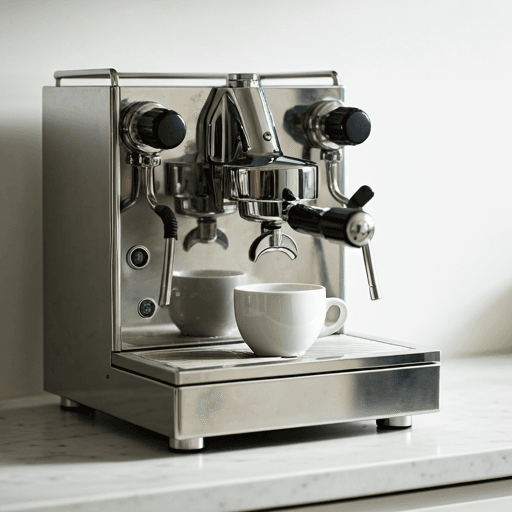
A moka pot is a stovetop coffee maker that brews thick, concentrated, espresso-style coffee by pushing steam-pressured water up through ground coffee. It is the cheapest serious way to get a strong, crema-edged cup at home in India, with no electricity and no machine. A good aluminium moka pot costs roughly Rs 1,500 to 2,500, lasts years, and pays for itself against a week of café spends. This guide covers what to buy, what size to pick, and how to brew it so the coffee comes out sweet instead of burnt.
What is a moka pot, and how does it work?
The italian moka pot was designed by Alfonso Bialetti in 1933, and the same three-chamber shape has sold over 300 million units worldwide. It works in one simple loop. You put water in the bottom, ground coffee in the middle basket, and an empty collecting chamber on top.
As the bottom heats up, steam pressure builds and forces hot water up through the coffee bed and into the top chamber. What collects on top is not true espresso, because the pressure is much lower than a real machine. But it is far stronger and richer than filter coffee, somewhere between a drip cup and a shot. People call it stovetop espresso for good reason.
If you want a true high-pressure shot with crema, that needs a pump machine, which we cover in our best espresso machine in India guide. A moka pot is the no-electricity, low-cost route to the same bold flavour.
Aluminium vs stainless steel: which moka machine to buy
The first real decision is the material of the moka machine. This is also what decides whether it works on your stove at all.
| Factor | Aluminium | Stainless steel |
|---|---|---|
| Price in India | Rs 1,500 to 2,500 | Rs 2,500 to 5,000 |
| Heating | Fast, even | Slower, retains heat |
| Induction safe | No (needs a diffuser plate) | Yes, directly |
| Lifespan | 5 to 10+ years | 10 to 20+ years |
| Maintenance | Hand wash only, can oxidise with hard water | Easy clean, resists stains |
Aluminium is the classic, the cheapest, and what most Italians actually use. It heats fast and evenly. The catch in India is that most modern kitchens now run on induction cooktops, and aluminium does not work on induction by itself. You would need a small steel diffuser plate, which costs around Rs 300 to 500, placed under the pot.
Stainless steel costs more but works straight on an induction hob, lasts longer, and shrugs off our hard tap water better. If your kitchen is induction-only, buy steel or commit to the diffuser plate. If you cook on gas or a regular flame, aluminium is the sweeter, cheaper choice.
A quick note on safety
Aluminium moka pots are safe for everyday use. The white powdery film that sometimes appears inside is harmless oxidation from hard water, not damage. Never put any moka pot in the dishwasher, and never scrub it with harsh soap, which strips the seasoned coffee oils that protect the metal.
What size moka cup do you need?
Moka pot sizes are listed in "cups," and this confuses almost every first-time buyer. A moka cup is not a mug. It refers to a tiny Italian demitasse of roughly 50 ml, not a 200 ml chai cup. So a "6-cup" pot does not make six mugs of coffee.
- 1-cup moka pot: about 60 ml of concentrate. One small strong serving.
- 3-cup moka pot: about 150 to 190 ml. One large mug, or two small ones. The right pick for a single person or a couple.
- 6-cup moka pot: about 300 ml of concentrate. Two large mugs, or three medium. Good for a small family.
One rule matters more than size itself. Always brew the full pot. A moka cup count is fixed by design, and brewing a half-filled basket throws off the extraction and turns the coffee bitter. If you usually make one cup, buy a 1-cup or 3-cup. Do not buy a big 6-cup and run it half empty.
What else you need to brew well
The pot alone is not enough. Two things decide whether your italian moka brew tastes sweet or harsh: the grind and the beans.
Grind is the single biggest lever. You want medium-fine, around the texture of table salt or granulated sugar. Finer than a pour-over, but not as fine as espresso powder. Too fine and the coffee chokes and turns bitter. Too coarse and it runs weak and watery. Pre-ground supermarket coffee is often wrong for moka, so a small hand or electric grinder is worth it; see our coffee grinder buying guide.
For beans, a medium to dark roast suits the moka best, as it stands up to the strong concentration. South Indian roasts and Italian-style dark blends both work beautifully. If you already brew other ways at home, a moka pot, a French press, and a grinder make a complete low-cost setup.
How to brew with an italian moka maker, step by step
This is the method that fixes most beginner problems. The whole brew takes about five minutes once the pot is hot.
- Boil your water first. Fill the bottom chamber with hot, pre-boiled water up to just below the safety valve, not over it. Starting with hot water means the pot spends less time on the flame, so the coffee never scorches. This single step is the biggest upgrade most people miss.
- Fill the basket level. Add your medium-fine coffee to the funnel basket and level it gently with a finger. Do not tamp it. Tamping is for espresso machines; in a moka pot it blocks flow and over-extracts.
- Wipe and assemble. Brush stray grounds off the rim so the seal sits clean, then screw the top on firmly. Use a cloth, because the bottom is already hot.
- Heat on medium, lid open. Place it on a medium flame. High heat is the second big mistake; it burns the coffee. Keep the lid open so you can watch.
- Pull it off early. When you hear a gentle gurgle and see honey-coloured coffee filling the top, take it off the heat. The loud spluttering, hissing stage means it is over-extracting. Stop before that.
- Cool the base and serve. Run the bottom under a tap or a wet cloth to stop extraction instantly. Stir the top chamber, then pour.
The result is strong and concentrated. Drink it neat like an Italian, top it with hot water for an Americano, or add steamed or hot milk for a quick latte at a fraction of café cost.
Common moka pot mistakes and quick fixes
- Coffee tastes bitter or burnt: heat is too high, grind is too fine, or you left it on the flame too long. Drop to medium, coarsen the grind, pull it off at the gurgle.
- Coffee is weak and watery: grind is too coarse, or you under-filled the basket. Use a finer grind and always fill the basket level and full.
- It splutters and leaks: the rubber gasket is worn or the rim was dirty. Replace the gasket and filter plate every 6 to 12 months; they are cheap spares.
- White film inside an aluminium pot: harmless hard-water oxidation. Rinse with warm water; avoid soap and dishwashers.
Caring for your moka kettle
Treat the moka pot like a kettle that you never fully scrub clean. Rinse all three parts with warm water after each brew, dry them, and store the pot unscrewed so the gasket can breathe and last longer. Skip soap. A thin layer of coffee oil seasons the metal and improves the taste over time, the same way a well-used moka kettle brews better in its second year than its first.
Is a moka pot worth it in India?
For most home coffee drinkers, yes. A pot moka gives you genuinely strong, café-style coffee for a one-time spend of a few hundred to a couple thousand rupees, with nothing to plug in and almost nothing to break. It is the best value entry point into proper coffee, and a natural step up from instant.
If you want fully automatic, push-button espresso or you are kitting out an office or café, an electric machine makes more sense. We supply, install, and service coffee and espresso machines and vending machines across India, with refills and on-call servicing. Browse the full range on our machines catalogue, or tell us your setup and we will recommend the right fit for your home or workplace.