
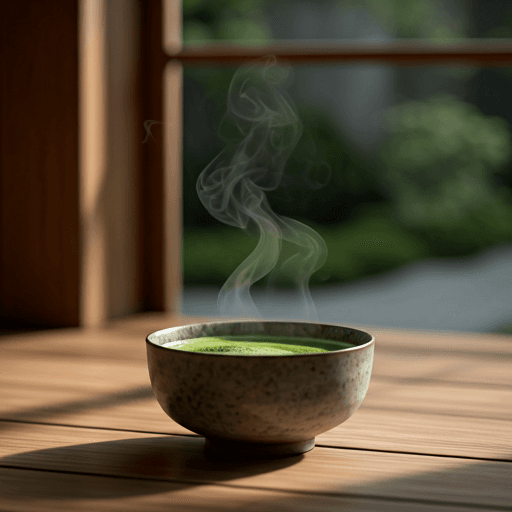
Irani chai is a soft, milky, lightly sweet tea perfected in the old Irani cafes of Hyderabad and Mumbai, where a strong tea decoction and slow-boiled milk are brewed separately and married only at the moment of pouring. That two-pot method is what makes it taste different from an everyday cup. Below we explain where Irani chai came from, how it is made, and then take you on a tour of India's other iconic regional chai styles worth trying.
What is Irani chai?
Irani chai is a category of tea, not a single recipe. The defining trick is that the tea and the milk are cooked apart. A dark, concentrated tea decoction simmers low and slow on one burner. Full-fat milk reduces on another until it thickens and sweetens. When you order, the cafe pours a measure of decoction into the glass and tops it with the hot reduced milk. The result is silky, mellow, and far less sharp than chai boiled all together in one pot.
The drink came to India with Zoroastrian (Parsi and Irani) migrants who left Persia from the late 1800s onward, many fleeing famine and hardship. They settled first around Mumbai's port districts and later spread to Hyderabad. To earn a living they opened corner cafes serving tea from a kettle, and those cafes became neighbourhood institutions. Today Irani chai is most strongly associated with two cities: Hyderabad, where it pairs with the buttery-salty Osmania biscuit, and Mumbai, where it comes with bun maska.
How Irani chai is served
The ritual matters as much as the recipe. In Hyderabad's Old City, glasses of Irani chai go out by the hundred from spots like Nimrah Cafe near Charminar and Cafe Niloufer, almost always with an Osmania biscuit or a soft bun on the side. In Mumbai, the same chai anchors the menus of heritage Irani cafes such as Britannia & Co (since 1923), Kyani & Co (1904), and Yazdani Bakery, served with thickly buttered bun maska. The chai is rarely the priciest thing on the table, which is part of its charm: a heritage cup for the price of pocket change.
Dum ki chai and kannu ki chai
Within the Irani-cafe world you will hear two terms. Dum ki chai refers to tea kept on a very slow flame for a long time so the flavour deepens and concentrates, the word dum meaning a gentle steam-cook. The other is kannu ki chai, a phrase used for an extra-strong, thick, dark brew, the kind of "kadak" cup that long boiling produces. If you want your Irani chai stronger than the standard pour, asking for a kadak or kannu ki chai-style cup gets you a bolder, more full-bodied glass with a deeper reddish-black colour.
Iconic regional chai styles across India
Irani chai is just one chapter. India brews tea in dozens of regional dialects, and each style says something about its place. Here are the most distinctive ones worth seeking out.
| Chai style | Region | What makes it distinct |
|---|---|---|
| Irani chai | Hyderabad, Mumbai | Tea and reduced milk brewed separately, then combined |
| Cutting chai | Mumbai | Strong half-glass of chai, quick and cheap |
| Suleimani chai | Hyderabad, Kerala (Malabar) | Black, milk-free, spiced, often with lime and jaggery |
| Noon chai (pink tea) | Kashmir | Salty pink tea from gunpowder green tea and baking soda |
| Kashmiri kahwa | Kashmir | Green tea with saffron, cardamom, cinnamon and almonds |
| Ronga saa | Assam | Strong red black tea, no milk, sometimes wild ginger |
| Lebu cha | West Bengal | Lemon tea with a black-salt spice mix, no milk |
| Tandoori chai | Pune and beyond | Brewed by plunging into a fire-heated clay kulhad |
Cutting chai (Mumbai)
"Cutting" means a cup cut in half. It is a strong, sweet, milky tea served in a small glass, just enough to refresh you between tasks. Cutting chai is the fuel of Mumbai's street corners, taxi stands and offices: cheap, fast, and shared. It is usually made with Assam CTC tea, milk, sugar and a touch of ginger or cardamom, boiled together hard so a small pour still hits strong.
Suleimani chai (Hyderabad and Malabar)
Suleimani is the milk-free counterpart to Irani chai. It is a black tea steeped with spices, commonly cardamom and cloves, often finished with a squeeze of lime and sweetened with jaggery or sugar. You will find it across Hyderabad and on the Malabar coast of Kerala, where it is the traditional close to a heavy meal because it feels cleansing rather than rich. Arab traders are credited with bringing it to the Malabar coast centuries ago.
Noon chai and kahwa (Kashmir)
Kashmir gives us two very different cups. Noon chai, also called pink tea or gulabi chai, gets its colour from a reaction between gunpowder green tea and baking soda; noon means salt in Kashmiri, and the tea is famously savoury rather than sweet, often topped with crushed nuts and traditionally brewed in a samovar. Kahwa is the celebratory opposite: a fragrant green tea brewed with saffron, cardamom, cinnamon and slivers of almond, served warm through long winters.
Ronga saa and lebu cha (the East)
In Assam, tea country itself, ronga saa ("red tea") is brewed black and strong with no milk, letting the local leaf speak; some versions add a hit of wild ginger. In Bengal, lebu cha turns tea into a tangy street snack: black tea steeped, then spiked with lemon and a secret-feeling masala of black salt, pepper and ginger powder. Both prove that a great Indian chai does not need milk at all.
Tandoori chai (Pune)
The newest icon on this list is tandoori chai, popularised in Pune. A clay kulhad is heated red-hot in a tandoor, then half-cooked chai is poured over it so the tea finishes brewing inside the smoking cup. The clay adds an earthy, slightly smoky note and a bit of theatre, which is why it travels so well on social media.
Where to find Irani chai near you
If you are searching for Irani chai near you, the honest answer is that the real thing lives in specific neighbourhoods. In Hyderabad, head to the Old City around Charminar and the Irani cafes near Tolichowki and Mehdipatnam. In Mumbai, the heritage Irani cafes cluster around Fort, Ballard Estate, Marine Lines and Grant Road. Pune has its own Irani and Parsi cafe pockets. For a city-by-city starting point, see our local pages for Hyderabad, Mumbai and Pune. To go deeper on the cafe history itself, read our guide to Irani and Parsi cafes of Mumbai and Pune.
Prefer to brew at home? The two-pot Irani method works on any stove, and our walkthrough on how to make masala chai at home covers the decoction-and-milk fundamentals you will reuse. To understand where all these styles sit in the bigger picture, start with what is chai: the Indian tea guide.
Serving cafe-quality chai at scale
For offices, cafes and outlets, the challenge is not the recipe, it is making a consistent cup hundreds of times a day. That is where a good tea or chai machine earns its keep: a steady decoction strength, the right milk temperature, and the same glass every time, without a person babysitting two burners. If you run a workplace pantry or a counter and want to serve Irani-style or masala chai reliably, our tea and chai machines are built for Indian volumes, and we install, refill and service them across the country.
Want help matching a machine to your daily cup count and budget? Tell us your requirements and we will recommend the right setup, then handle installation and ongoing service.