
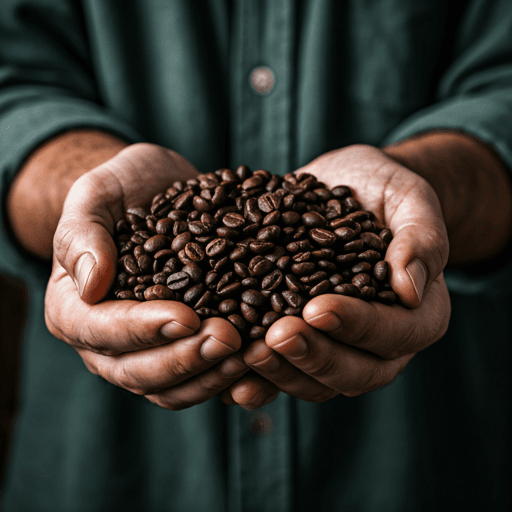
The short answer: the arabica coffee price today almost always sits well above the robusta price, because arabica is harder to grow, lower-yielding and prized for flavour, while robusta is hardier, higher-yielding and cheaper. Both are global commodities that trade daily on futures exchanges, so the exact figure changes every single day. What matters for an Indian buyer is not chasing one day's number, but understanding the bands, what drives them, and how a few rupees per kilogram of green bean translate into the cup you serve at a desk, in a cafe or at home.
This guide explains the arabica-versus-robusta gap, what makes prices move, where to track them honestly, and how green-bean costs flow through to your cappuccino, filter kaapi or office vending cup. We deliberately use durable price ranges rather than a today's-only quote, because a live commodity figure would be wrong within hours.
Arabica coffee price today vs robusta: the core difference
Arabica and robusta are two different species of coffee plant, and the market treats them as two separate commodities with two separate prices. As a rule, arabica trades at a premium to robusta. The gap widens and narrows over time, but arabica is structurally the more expensive bean.
Here is why, in plain terms:
- Yield and difficulty. Arabica grows best at higher altitudes, ripens unevenly so cherries are often hand-picked, and yields less per tree. Robusta tolerates heat, lower altitudes and pests, matures faster and yields more. More effort plus less output equals a higher price for arabica.
- Flavour and demand. Arabica is smoother, more aromatic and dominates specialty and single-origin coffee. Robusta is stronger, more bitter and far higher in caffeine, which is exactly why it anchors espresso blends and instant coffee. The coffee robusta price stays lower partly because it is positioned as the workhorse bean.
- Crema and body. A touch of robusta in an espresso blend builds thicker crema and a heavier body. That is one reason the coffee price robusta commands attention even from premium cafes: it earns its place in the cup, not just on the spreadsheet.
So when someone asks for the arabica coffee price today, the honest framing is: it is the higher of the two beans, it moves daily, and the size of its premium over robusta is itself a number worth watching. In years when robusta supply tightens, that premium can shrink sharply; in a strong robusta harvest, it widens again.
How coffee prices are actually set
Neither bean has a single fixed price. Both are set by global futures markets, then adjusted for quality, origin and local supply before they ever reach an Indian roaster.
- Arabica is benchmarked on the New York exchange (ICE), quoted in US cents per pound.
- Robusta is benchmarked on the London exchange (ICE), quoted in US dollars per tonne. When traders talk about the robusta coffee price today, they usually mean the nearby London futures contract.
On top of these benchmarks, real beans trade at a premium or discount based on grade, processing and origin reputation. Indian growers in Karnataka, Kerala and Tamil Nadu sell parchment and cherry that is priced off these global benchmarks, then converted into rupees. For a deeper walk-through of the London market specifically, see our guide on the London robusta coffee price market.
The USD-INR factor most buyers forget
Because coffee is priced in dollars, the rupee exchange rate sits between the global market and your purchase order. If global robusta is flat but the rupee weakens against the dollar, your landed cost in INR still rises. This is why two cafes can see different price trends depending on when they bought and how the currency moved. We cover the full chain in coffee prices in India explained.
Where India fits in the global picture
India is a meaningful producer in its own right, and unusually it grows both species. The country is known for shade-grown coffee from the Western Ghats, with Karnataka the largest growing state, followed by Kerala and Tamil Nadu. A large share of the crop is robusta, much of it exported, so when global robusta firms up, Indian growers and exporters feel it directly. For a domestic roaster, that means the price you pay reflects two things at once: the London benchmark and the strength of the local harvest. A bumper Indian crop can soften domestic green-bean costs even while global prices hold, and a weak monsoon can do the opposite.
What moves the robusta price and the arabica price
Day-to-day swings come from a handful of recurring drivers. Knowing them helps you tell a genuine trend from noise.
| Driver | What it affects | Why it matters to you |
|---|---|---|
| Weather and harvest in Brazil & Vietnam | Brazil leads arabica; Vietnam leads robusta | Drought or frost there can lift the global robusta price and arabica price within days |
| India's crop (Karnataka, Kerala, Tamil Nadu) | Local supply and export availability | A strong Indian harvest can ease domestic green-bean costs |
| USD-INR exchange rate | Landed cost in rupees | A weaker rupee raises your cost even if global prices hold |
| Global stocks and demand | The arabica-robusta premium gap | When roasters switch to cheaper robusta, the coffee robusta price firms up |
| Freight and logistics | Shipping and lead times | Disrupted routes add cost between farm and roaster |
A useful habit: when you see a headline that "coffee prices jumped", check which bean and which exchange. A move in London robusta does not automatically mean arabica moved the same way, and vice versa.
Where to track live prices honestly
You do not need a Bloomberg terminal. For a reliable read, look at sources in this order:
- Commodity exchanges for the benchmark futures: New York/ICE for arabica, London/ICE for robusta. These are the prices everyone else is quoting.
- Financial and chart platforms (broker sites, MCX-linked data, mainstream financial portals) for an easy daily view of the robusta price and arabica price with charts.
- The Coffee Board of India and trade bodies for India-specific green-bean indications in rupees, closer to what a domestic roaster pays.
If you want to read those daily charts without getting lost, our walkthrough on how to read coffee price charts helps you separate a real trend from daily noise. Track the trend over weeks, not the tick-by-tick.
From green bean to your cup: where the rupees go
This is the part most price articles skip. The commodity price is only the first link. Between the exchange and your cup sit roasting, packaging, brand margin, logistics, GST and retail markup. That is why a few rupees of movement in the green-bean price rarely doubles your cup cost, and why a cafe price and a supermarket pack price look so different.
Durable ranges an Indian buyer can plan around:
- Retail roasted or ground coffee: typically a few hundred rupees per 250g, with robusta-heavy and instant blends at the lower end and specialty single-origin arabica higher.
- A cafe cappuccino or latte: usually about Rs 150-300 depending on city and chain.
- Office vending cup: often a few rupees to low double-digits per cup once you account for machine, refills and service, far below cafe pricing.
- Home espresso shot: a few rupees of beans per shot once you own the machine; the bean cost is small versus the equipment.
The lesson for buyers: the bean is rarely your biggest lever. Your machine, your blend choice and your per-cup volume matter far more to unit economics than whether robusta moved 3% last week. A small shift in the green-bean price spread over hundreds of cups disappears against the fixed cost of your equipment and service.
What this means for cafes, offices and homes
For cafes
You will likely run an arabica-forward blend with some robusta for crema and cost control. When the arabica price today spikes, a slightly higher robusta share protects your margin without wrecking flavour. Lock blends and suppliers over a season rather than reacting to every daily move, and price your menu with a little headroom so a mid-season green-bean jump does not force a sudden change.
For offices
Per-cup commodity cost is almost irrelevant at office scale; reliability, refills and service dominate. A robusta-forward instant or bean blend keeps cost low and caffeine high, which suits a busy floor. Choose a machine sized to your daily cup count and a refill plan you can actually keep stocked.
For homes
Bean price barely registers per cup. Pick a blend you enjoy, buy fresh in small quantities, and invest in a machine that makes good coffee repeatable. Start with best coffee machines for home in India.
Quick buyer's checklist
- Know which bean you are buying: arabica for flavour, robusta for strength, crema and cost.
- Check the exchange (New York for arabica, London for robusta) and the USD-INR direction before reacting to a headline.
- Watch the trend over weeks, not single-day prices.
- Remember the bean is a small slice of your final cup cost behind machine, service and margin.
- Match your blend to your use case: cafe, office or home.
Great coffee is repeatable, and good buying decisions are too. Once you understand why the arabica coffee price today runs above robusta and what actually moves both, you can stop chasing daily quotes and focus on the blend and machine that fit your space. If you would like help matching a setup to your volume and budget, request a tailored quote from our team, or browse our range of espresso machines built for consistent cups at home, in the office or across a busy cafe.